Bangladesh has a long and complex past spanning over 5,000 years. It has a strong people, flowing rivers and beautiful landscapes. The history of Bangladesh, from its ancient civilizations to its present independence, is full of cultural fusion, struggle and new beginnings. This article discusses the changes in Bangladesh, highlighting the most important periods in the formation of its identity over time.
The region of Bengal and the birth of ancient myths
Two ancient Indian epics, the Mahabharata and the Puranas, indicate that the people of Bengal had been living there for over 3,000 years. A well-known story about King Bali and his wife, Queen Sudeshna, is told in these scriptures. Anga, Banga, Kalinga, Pundra and Suhma were their five sons.
These sons all created their own kingdoms and named them:
- Anga: This name originated from the region of present-day Bihar.
- Banga: This word comes from the central and southern parts of Bangladesh today.
- Kalinga is located in present-day Odisha and northern Andhra Pradesh.
- Pundra is located in the north of Bangladesh, around Mahasthangarh.
- Suhma (or Sumba) is located in the southwest of Bengal (now West Bengal, India).
Later, ancient Indian and Buddhist literature referred to these kingdoms as the Bhritha Mahajanapada (Great Kingdoms). This mythology depicts the depth of culture and civilization of the Bengal region, blending oral tradition with archaeological and historical data.
The period before the era of recorded history and ancient history (c. 3000 BCE to 500 BCE)
There is archaeological evidence that people lived in the Bengal Delta as early as 3000 BCE. Tools, pottery, and other artifacts found at sites such as Mahasthangarh, Wari-Bateswar, and Chandraketugarh indicate that the ancient civilizations practiced agriculture and trade. People believe that Wari-Bateswar was an important city that existed at least since the 4th century BC.It may have had some connection to the Roman Empire and trade routes in Southeast Asia. The region was influenced by Vedic culture, which was the basis of early Hindu society. The Ganges and Brahmaputra rivers allowed people to trade, exchange ideas, and practice agriculture easily.
During the reign of Emperor Ashoka (c. 268–232 BC)
The Mauryan Empire conquered the Bengal region. Ashoka helped spread Buddhism throughout the subcontinent. Ashoka’s inscriptions are found on the borders of Bengal, which show that he had influence in the region. The Gupta Empire (320–550 AD) followed the Mauryas and was a time when art, literature, and science flourished. Bengal prospered as a province. Trade routes connected it to Southeast Asia. Hinduism and Mahayana Buddhism flourished during this period, and traditional Sanskrit literature became prominent.
The Pala and Sena periods spanned from 750 to 1200 CE.
The Pala dynasty (750–1174 CE) was the first major Buddhist government to take power in Bengal. The Palas were a notable group of Mahayana Buddhists led by the elected king Gopala. They built major schools, Vikramshila and Nalanda University, which were very important for the study of Buddhism in Asia.
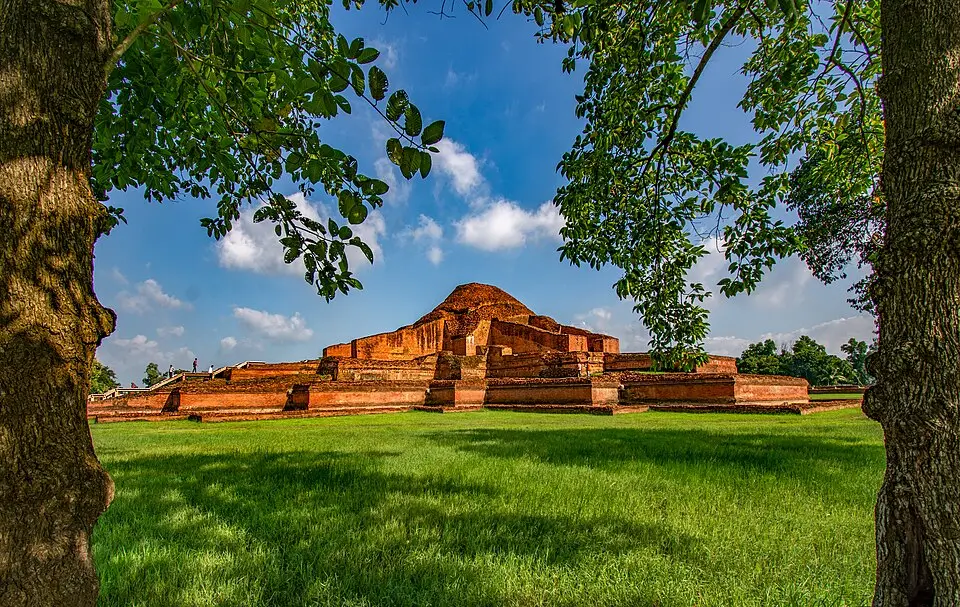
The Sompur Mahavihara in Paharpur is the most notable building of this period. It is now a UNESCO World Heritage Site. This large monastery is a great example of the art and spirituality of the Pala period. It also shows how essential Bengal was to the development of Buddhist ideas and architecture.
The Sena dynasty (1070–1230 CE)
Who were orthodox Hindus, took power from the Palas and established Hinduism, particularly Vaishnavism, as the dominant religion. They made the caste system more rigid, but they also built temples and made Bengali culture more interconnected.
Islamic rule and Sultanate rule (1204–1576 CE)
In 1204, Bakhtiyar Khalji led a Turko-Muslim army into Bengal, which marked the beginning of Islamic sovereignty there. When Bakhtiyar Khalji soon captured Nadia, the Sena dynasty fell and Bengal began to be ruled by the Sultanate. For about 350 years, independent Muslim sultans ruled Bengal and established an Indo-Islamic civilization that was unlike any other. Gaur and Pandua were centers of art and architecture, with large mosques such as the Adina Mosque and the Chhota Sona Mosque. Both Persian and Arabic have influenced the development of Bengali language and literature. Sufis and merchants played an important role in the spread of Islam, which blended with local traditions to create a unique religious culture. The culture and language of Bengal changed greatly during the Sultanate.
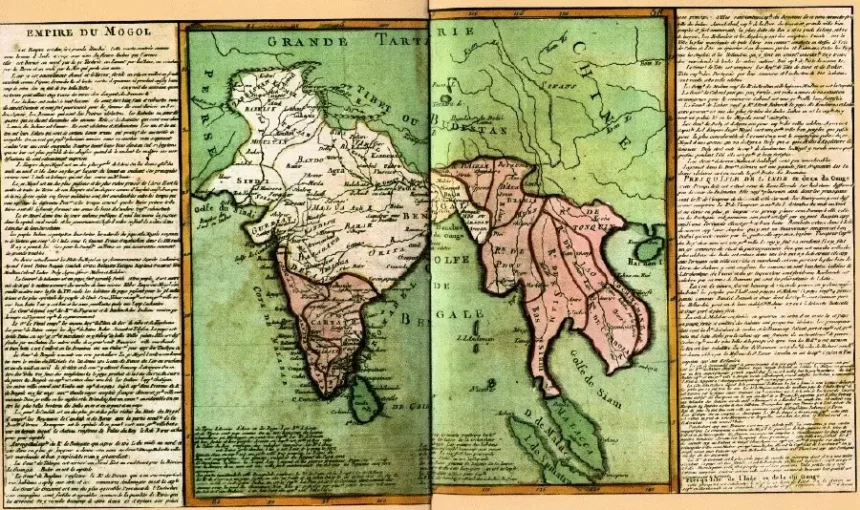
The Mughal period lasted from 1576 to 1757 AD.
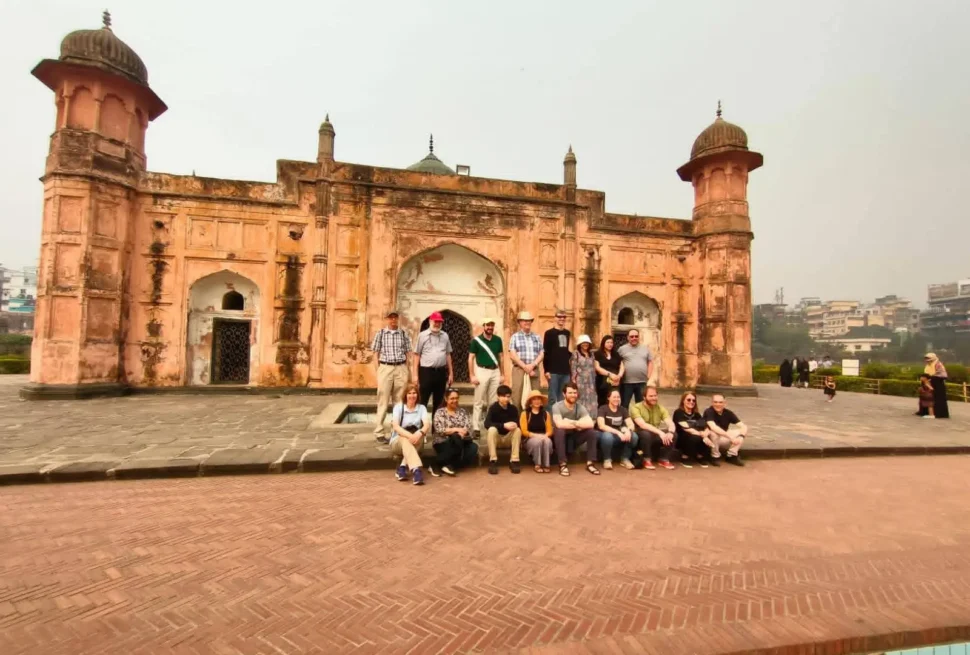
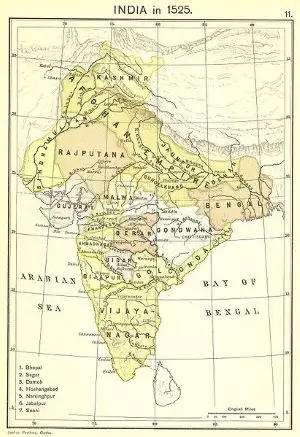
The Mughals conquered Bengal after defeating the last Sultan of Bengal in 1576. Bengal was the richest province of the Mughal Empire. It was known for its beautiful muslin cloth, agriculture, and important port. Dhaka became a major Mughal city and the center of the Bengali sub-kingdom.
In 1608. The Mughals built forts, gardens and mosques that still exist there today. For example, Lalbagh Fort and Bara Katra. European traders like the Portuguese, Dutch, French and British flocked to Bengal because it was prosperous.
The British ruled the colonies from 1757 to 1947.
The British took over when the East India Company defeated Nawab Siraj-ud-Daulah in the Battle of Plassey in 1757. Over time, Bengal’s wealth was transferred to Britain, which damaged the economy and led to famine. Until 1911, Calcutta (now Kolkata) was the capital of British India. The Indian Renaissance was very important in Bengal, as it was home to talented intellectuals like Raja Rammohan Roy, Rabindranath Tagore and Kazi Nazrul Islam. In 1905, the British partitioned Bengal, which led to a large number of people revolting. In 1911, the partition was reversed. But the roots of communalism were sown, which eventually divided India.
During East Pakistan (1947–1971)
When India was partitioned in 1947, Bengal was divided into two parts: West Bengal (India) and East Bengal (East Pakistan), which became part of Pakistan. Although the majority of the population, East Pakistanis were not involved in politics or the economy.
The Language Movement of 1952 occurred when Urdu became the sole official language of the state. Students who protested demanding recognition of Bengali were shot dead by the police. The movement expressed both a sense of cultural identity and a desire to fight against the government. For years, Sheikh Mujibur Rahman and the Awami League pushed for independence after years of oppression and centralization. The Awami League won the most votes in the 1970 elections, but the Pakistani military did not relinquish control.
War of Independence and Liberation (1971)
Bangladesh became independent on 26 March 1971, when the army brutally suppressed an uprising known as Operation Searchlight. The subsequent independence struggle lasted nine months and killed about three million people, leaving millions more homeless.
India provided arms and tactics to the Bengali rebel group Mukti Bahini, which led to the surrender of Pakistani troops on December 16, 1971. Sheikh Mujibur Rahman was its first leader after Bangladesh became independent.
post-independence era (1971–present)
Bangladesh had much to do in the early days of independence: to reunite the war-torn country. The assassination of Sheikh Mujibur Rahman in 1975 began a period of political unrest and a series of military coups. Over time, democracy returned, but the Awami League and the BNP, the two largest political parties, regularly fought each other.
Bangladesh has made great progress in health, education, gender equality, and poverty reduction, although it has faced challenges. The economy has now shifted from dependence on aid to dependence on exports, particularly in the garment trade.
Bangladesh keeps its cultural history alive through music, literature, festivals, and the UNESCO-listed Sundarbans and the historic mosque city of Bagerhat.
Bangladesh is a South Asian country that is currently thriving. It is proud of its long history and recent conquests, and it is strong and diverse.
Conclusion
From the medieval trading town of Wari-Bateshwar to the bustling megacity of Dhaka, the story of Bangladesh is one of diverse civilizations, cultures, and struggles for justice and identity. This land has seen empires come and go, religions have converged, and people have fought for their rights. To truly understand the strength and passion of the people of Bangladesh, one must know their history. They are writing new chapters in the country’s history every day.