Why a Bangladesh Photography Tour Is Worth Your Time
A Bangladesh photography tour takes you to one of the most photogenic and least-photographed countries in South Asia. Within a few hours’ travel you can move from mangrove forests to rolling tea estates, from medieval temples to river ports full of wooden boats. The light is rich, the colors are bold, and almost every street has a story in it.
Most travelers skip Bangladesh, so you will not find the crowds and repeated shots you see at more famous destinations. For a photographer, that means original frames and genuine encounters.
Best Places for a Bangladesh Photography Tour
1. The Sundarbans: mangroves, mist and wildlife
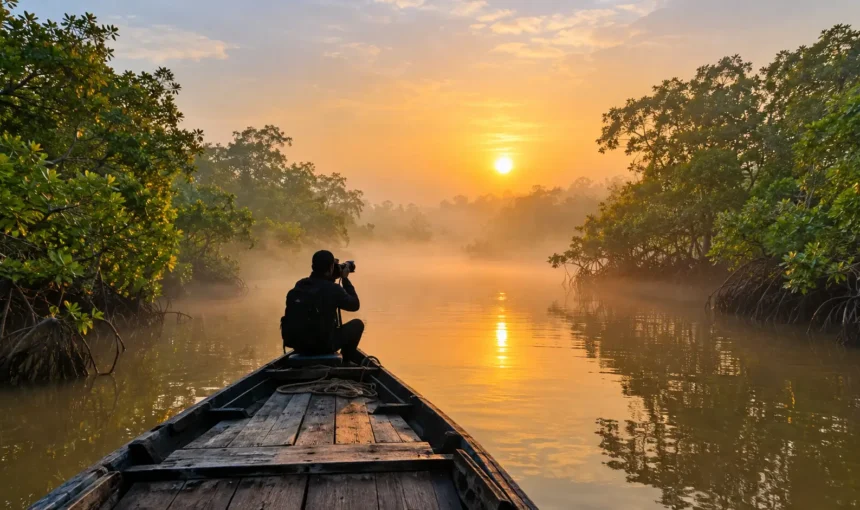
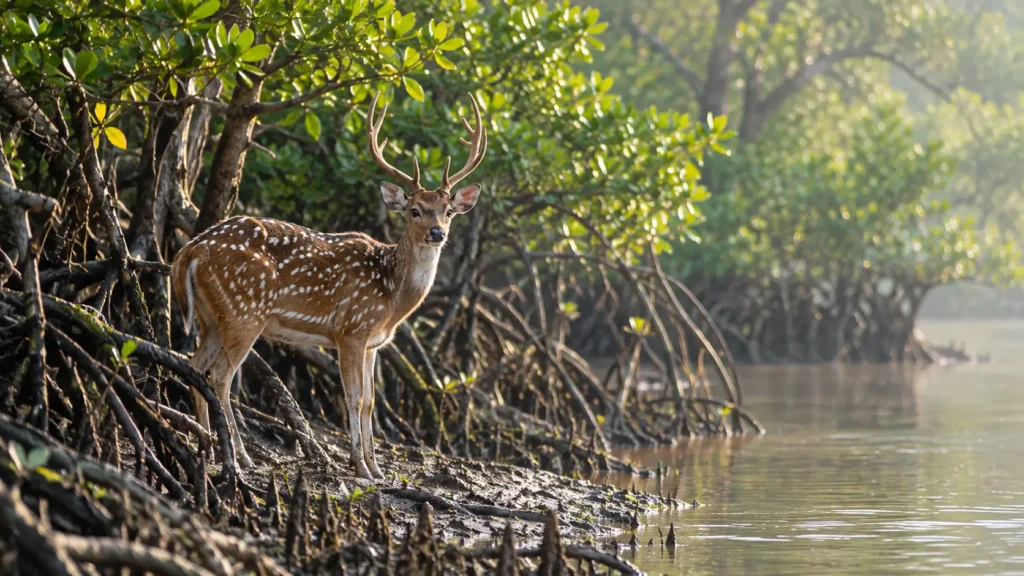
The Sundarbans is a UNESCO World Heritage Site and the largest mangrove forest in the world. Shooting from a boat at dawn, when mist sits over the tidal creeks, gives you some of the most atmospheric images in the country. You can photograph spotted deer, monkeys, kingfishers, crocodiles and a wide range of birdlife. Tigers are very rarely seen, so go for the landscapes and the smaller wildlife.
Tip: Bring a telephoto lens (200mm or longer) and a dry bag, because humidity and spray are constant.
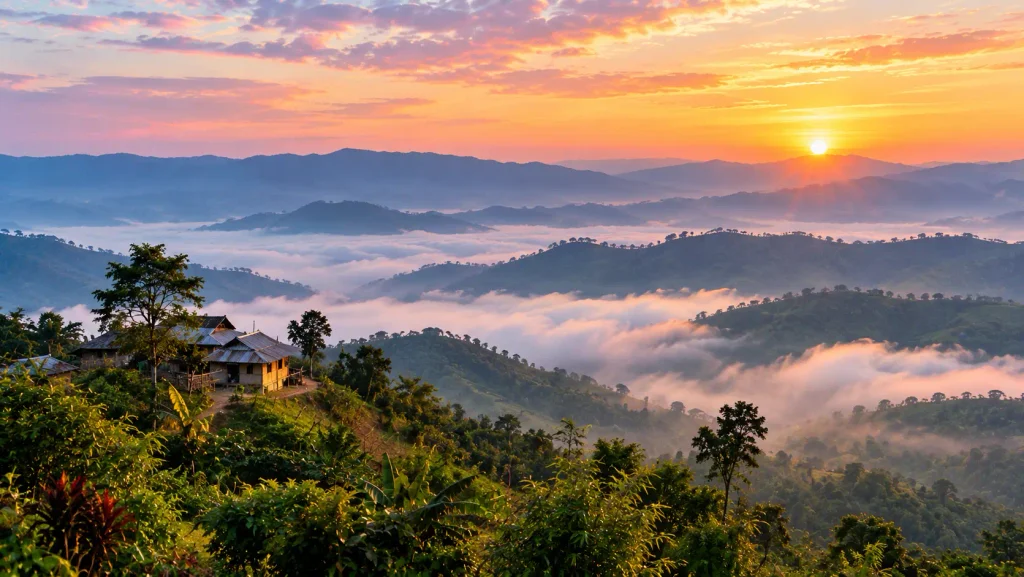
2. Srimangal and Sylhet: tea gardens and green hills
Srimangal is known as the tea capital of Bangladesh. Its rolling plantations, tea pickers at work and morning fog make for classic landscape and documentary photography. Nearby, Lawachara National Forest offers rainforest shooting, and Sylhet’s Ratargul swamp forest and Jaflong’s river and hill scenery add more variety.
3. Old Dhaka: street and documentary photography
Old Dhaka is energetic, crowded and full of visual detail. Sadarghat river port, Shankhari Bazar and the narrow lanes around Armanitola reward patient street photographers. You will find craftspeople at work, rickshaws, market scenes and layers of architecture. A local guide helps you find the best locations and move around comfortably.
4. Heritage sites: Paharpur, Bagerhat and Puthia
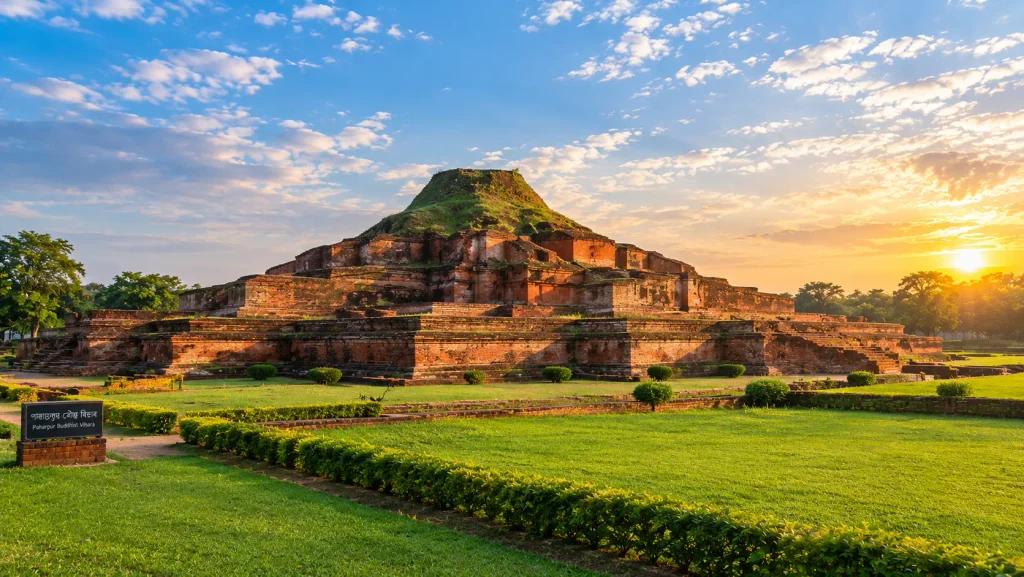
For history and architecture, the Paharpur Buddhist Vihara, the Sixty Dome Mosque in Bagerhat and the terracotta temples of Puthia are all strong subjects. Early morning and late afternoon light bring out the texture of the brick and terracotta.
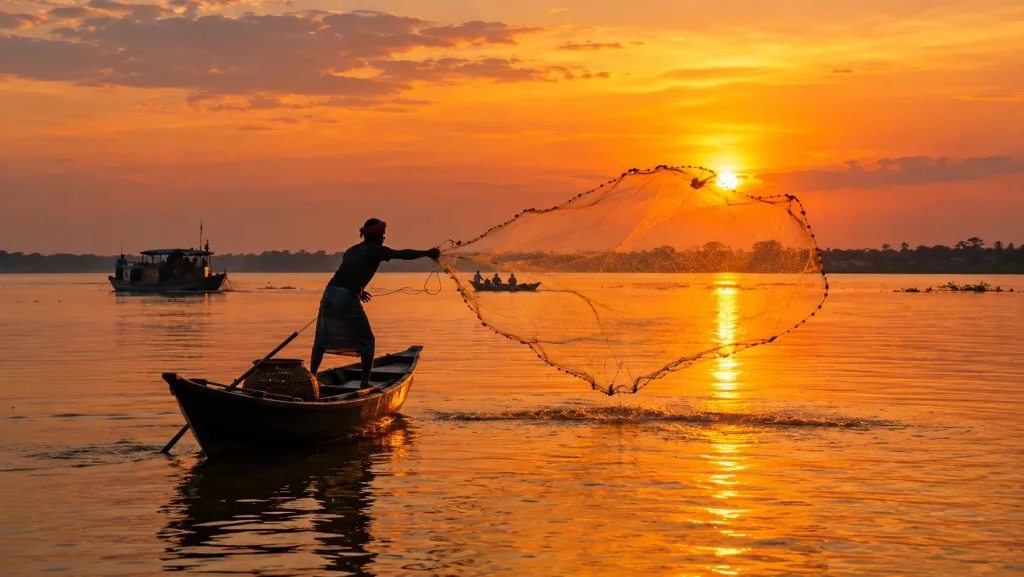
5. Riverside life and boats
Rivers define Bangladesh. Boats, fishermen, ferries and floating markets give you constantly changing scenes, especially around golden hour.
6. Beaches and hills
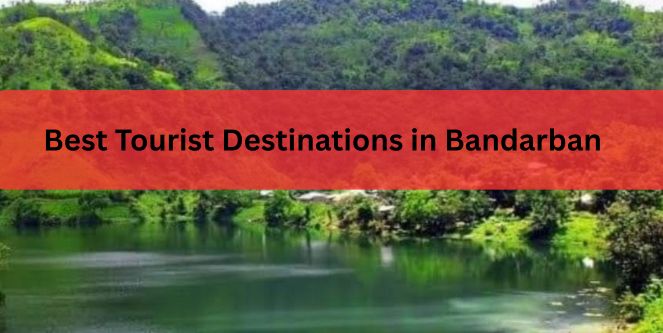
Cox’s Bazar and Kuakata offer sunrise and sunset beach photography. The hill districts of Bandarban and Rangamati give you misty ridgelines and the everyday life of hill communities.
Best Time for a Bangladesh Photography Tour
The best months are November to February. Weather is cooler and drier, skies are clearer and travel is easier. March and April are hotter but still workable, with dramatic skies building toward monsoon. From June to September the monsoon brings intense greens and moody clouds, though rain and travel delays become more likely. It suits photographers who are flexible and prepared.
What to Pack
- A weather-sealed camera body, or rain protection for your gear
- A wide-angle lens for landscapes and street scenes
- A telephoto lens for wildlife and compressed scenes
- Spare batteries and memory cards, since charging can be unreliable in remote areas
- A lens cloth and silica gel packs for humidity
- Light, modest, breathable clothing
Photography Etiquette in Bangladesh
Bangladeshis are generally warm and curious about visitors with cameras, and people will often ask you to take their picture. Still, a few habits go a long way:
- Ask permission before taking close portraits, especially of women and elders.
- Be respectful around mosques and religious sites, and check what is allowed before shooting inside.
- Share your photos on your camera screen when people ask. It builds trust.
- Check local rules before flying a drone, as permission is generally required.
Why Travel with a Guided Photography Tour
You can photograph Bangladesh independently, but a guided tour saves time and avoids common problems. A local guide arranges transport, permits and boat access, knows where the light is best at different times of day, and helps you connect with local communities respectfully. That means more time behind the camera and less time on logistics.
At Bangladesh Tours and Adventures, we organize guided trips across the country, including the Sundarbans, tea country and Old Dhaka, tailored to your interests and schedule.
Frequently Asked Questions
Is Bangladesh good for photography?
Yes. It combines varied landscapes, rich culture, wildlife and everyday street life, and it is far less photographed than neighboring countries.
How many days do I need for a Bangladesh photography tour?
A focused trip can work in 5 to 7 days (for example, Dhaka, Sundarbans and Srimangal). Ten days or more lets you add heritage sites and the hills at a relaxed pace.
Do I need a special permit to take photos?
Ordinary photography at public places and tourist sites does not require one. Some protected areas, such as the Sundarbans, require entry permits, which a tour operator can arrange. Check current rules for drones and restricted sites before you travel.
What is the best camera setup for a Bangladesh photography tour?
Bring a versatile zoom, a wide-angle lens, and a telephoto lens if you plan to shoot wildlife. Pack weather protection.
Plan Your Bangladesh Photography Tour
If you want to photograph the real Bangladesh with local expertise behind you, get in touch and we will build an itinerary around the places and subjects you care about most.